


India’s Historic Lifeline: The Grand Trunk Road
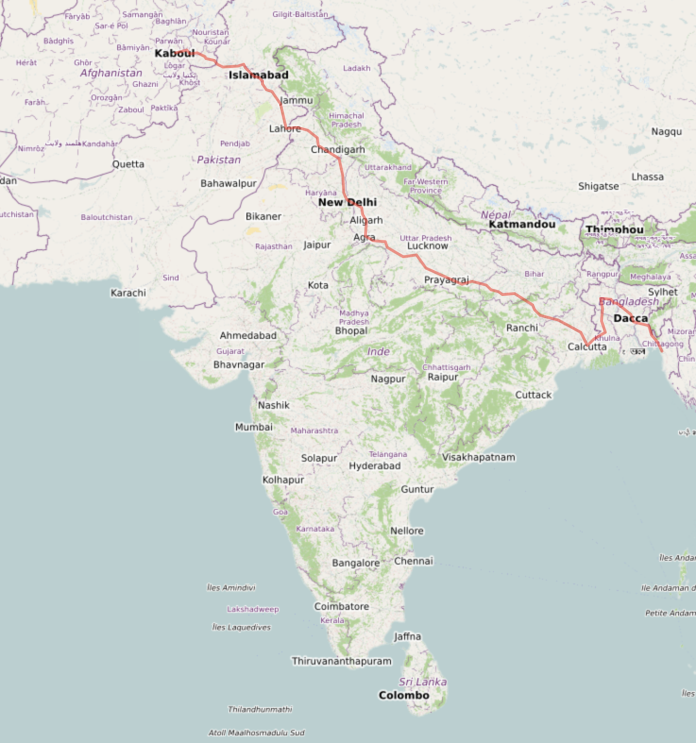
One of the oldest and most important roadways in Asia, the Grand Trunk Road connects several important towns and areas throughout the Indian subcontinent. For more than two millennia, this historic route—which stretches from Chittagong in modern-day Bangladesh to the Khyber Pass in modern-day Pakistan—has served as the foundation for trade, culture, and military movement. In addition to being a real route, the Grand Trunk route represents the deep cultural and historical ties that bind the various parts of South Asia together. It has been crucial in forming the subcontinent’s social and economic environment over time.
Around the third century BCE, during the Mauryan Empire, the Grand Trunk Road first appeared. The original form of the road is thought to have been built by Emperor Chandragupta Maurya, and it was subsequently maintained and extended by succeeding kings. However, the route underwent considerable upgrades and solidification into its current form during the 16th-century Suri Empire’s founding by Sher Shah Suri. The route became more efficient for traders and travelers because to Sher Shah Suri’s construction of rest houses, stone paving, and a number of milestones and road markings. His work to upgrade the Grand Trunk Road’s infrastructure created the groundwork for it to become a vital commerce route that connected the subcontinent’s eastern and western regions.
Over the ages, the Grand Trunk Road has fulfilled a variety of functions. In the past, it served as an important commerce route that linked the markets of Delhi, Lahore, and other places with the fertile agricultural regions of Bengal. The route promoted cultural interchange between different regions by facilitating the movement of commodities including textiles, silk, spices, and other things. It also made it easier for technologies, ideas, and religions to proliferate, which was crucial to the formation of a common cultural legacy throughout South Asia. From Alexander the Great to Marco Polo, the route saw the passing of several conquerors, traders, and travelers who were all drawn to the thriving commercial centers along its course.
The Grand Trunk Road was important for military purposes in addition to trade. In times of war, the road served as an army’s strategic route. The Grand Trunk Road was essential to the movement of troops and supplies, especially under the Mughal Empire. It was an essential component of the empire’s military infrastructure because it was used to carry troops, supplies, and weaponry. Recognizing its strategic importance, the British Empire also kept up the road during their colonial era to make it easier for troops and colonial supplies to travel about. The Grand Trunk Road is a vital component of India’s security and logistics efforts even now.
The Grand Trunk Road is still a vital route for travel and trade in Bangladesh, Pakistan, and India today. It is a vital route for both domestic and international transportation, passing via important cities including Delhi, Lahore, Kanpur, Varanasi, and Kolkata. Trucks, buses, and passenger cars still often travel the Grand Trunk Road in spite of contemporary freeways and transportation systems. It connects people and goods across regions, giving both rural and urban communities essential connectivity. Since many tourists are drawn to the route because of its rich history and tradition, the road also contributes to tourism.
However, the Grand Trunk Road has maintenance and modernization issues, just as many other old roadways. Due to development, traffic congestion, and the effects of climate change, some sections of the road have deteriorated over time. Several nations are working on the road’s development and upgrading in order to overcome these problems. For example, the National Highways Development Project (NHDP) in India involves upgrading and expanding the Grand Trunk Road. The goal of this project is to increase the road’s capacity and effectiveness so that it can continue to be an essential lifeline for travel, trade, and economic growth.
To sum up, the Grand Trunk route is more than just a route; it is a representation of the cultural diversity, rich history, and thriving economy of South Asia. This historic path has linked areas, promoted trade, and allowed for the interchange of ideas for ages. The road’s importance in the subcontinent’s history cannot be denied, despite ongoing maintenance and modernization issues. The Grand Trunk Road will probably continue to play a crucial role in South Asia’s transportation system as it develops further, preserving the history of one of the most significant and ancient road networks in the world.