
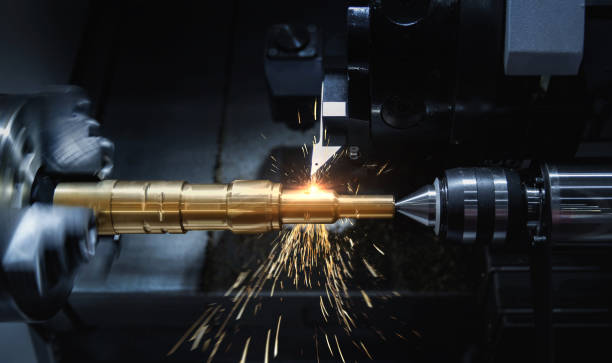


Designing medical devices is a balance between innovation and precision. Engineers must create prototypes quickly, refine them efficiently, and prepare them for safe, repeatable production. That’s where CNC machining in Alabama plays a vital role, giving medical developers a direct path from early sketches to scalable production lines without compromising quality or accuracy.
Precision Shaping of Early-stage Prototypes
Early prototypes of medical devices require careful shaping to ensure the design functions as intended. CNC machining in Alabama allows engineers to produce accurate cuts and surfaces that mirror the original concept without delay. This process helps eliminate early design flaws and provides tangible models for testing usability, comfort, and function. For devices like surgical tools or implant casings, that level of accuracy is essential to prove a design before committing to larger production runs.
Alabama CNC machining also provides rapid iterations during these early stages. Instead of waiting weeks for outsourced models, medical developers can have functional prototypes turned around quickly. A robotics engineering company in Alabama often integrates CNC machining into its service offerings, combining design expertise with production capacity. This partnership helps streamline the move from digital renderings to physical models, giving developers confidence in their design decisions.
Consistency in Repeatable Part Production
After a prototype succeeds, the next step is producing repeatable parts with no variation. CNC machining ensures that each component is identical to the one before it, which is critical in medical applications where even slight differences could affect patient safety. By following strict tolerances, Alabama CNC machining delivers consistent parts that meet regulatory expectations.
This consistency is also valuable when scaling production. A robotics engineering company in Alabama that provides CNC machining services can apply the same precision across thousands of units. That means mass production remains faithful to the approved prototype. For manufacturers, it reduces risk and guarantees that hospitals, clinics, and research labs receive reliable equipment without discrepancies between batches.
Fast Turnaround for Small Testing Batches
Medical developers often require limited runs of components for clinical testing or pilot programs. CNC machining in Alabama enables the creation of small batches on demand without extensive setup times. This flexibility ensures device makers can deliver products for trials quickly and gather feedback without delays.
Small batch production also helps control costs. Instead of committing to large-scale manufacturing prematurely, developers can validate performance through targeted testing. Alabama CNC machining adapts efficiently to these needs, allowing for quick adjustments if feedback suggests design modifications. This responsiveness reduces development risks while keeping projects moving forward.
Support for Intricate Medical Device Designs
Modern medical devices often feature intricate designs, from minimally invasive surgical instruments to compact diagnostic tools. CNC machining excels in producing these complex geometries with fine detail and high accuracy. Alabama robotics engineering companies frequently use multi-axis machining to meet the demands of intricate medical components.
These capabilities make it possible to design devices that are both functional and patient-friendly. Features such as textured grips, contoured surfaces, or micro-sized components can be produced reliably. With Alabama CNC machining, the complexity of a design does not hinder its feasibility—engineers can push creative boundaries while still delivering parts ready for clinical use.
Adaptability to Multiple Biocompatible Materials
Medical devices often require materials that are not only strong but also biocompatible. CNC machining in Alabama supports a range of materials such as titanium, stainless steel, and advanced plastics. Each material offers unique benefits—titanium for implants, stainless steel for surgical tools, and plastics for lightweight components.
By accommodating these options, Alabama CNC machining ensures developers can test and produce parts suited to specific medical applications. Working with a robotics engineering company in Alabama also allows access to expertise in material selection. This helps match the right substance with the intended function, balancing safety, performance, and regulatory requirements.
Smooth Transition from Design to Scaled Production
Transitioning from a working prototype to full-scale production is often one of the biggest challenges in medical device development. CNC machining in Alabama simplifies this process by maintaining continuity between small-run and mass production. The same equipment and processes can be applied, minimizing disruptions or redesigns during scaling.
This smooth handoff reduces time-to-market for new devices. Developers avoid the delays that occur when different vendors handle prototyping and production separately. An Alabama robotics engineering company that offers CNC machining can carry projects through the entire lifecycle, ensuring design intent remains intact while scaling up output.
Reliable Accuracy in Critical Medical Components
Accuracy is non-negotiable in medical device manufacturing. CNC machining provides the precision necessary for parts such as orthopedic implants, surgical instruments, and diagnostic equipment. Alabama CNC machining facilities maintain tight tolerances and repeatable accuracy across all production runs, ensuring components fit and function exactly as intended.
That reliability supports compliance with strict healthcare regulations. For companies pursuing FDA approvals or certifications, proof of consistent accuracy is essential. Working with a robotics engineering company in Alabama that integrates CNC machining ensures both the technical and compliance aspects of production are met.
Reduction of Iteration Cycles During Development
Medical device development often involves multiple iteration cycles, which can extend timelines and increase costs. CNC machining in Alabama reduces this burden by producing revised parts quickly and accurately. Engineers can make design adjustments, test them in real conditions, and move forward without extended downtime.
By shortening iteration cycles, developers maintain momentum throughout the design process. An Alabama robotics engineering company that incorporates CNC machining into its workflow allows clients to adjust and improve devices with speed. This not only accelerates innovation but also provides a competitive edge in bringing new medical solutions to market.