
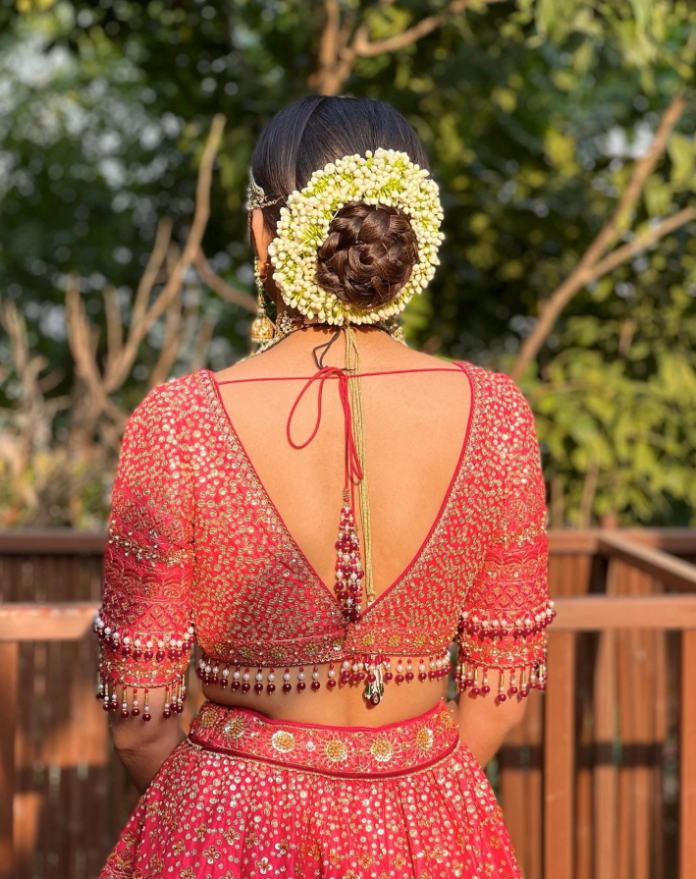


traditional blouse back design
In many cultures, blouses are an essential component of traditional clothing, particularly in India, where they are used extensively in sarees, lehengas, and other traditional garments. Intricate craftsmanship and artistic expression are used in the back design of blouses, which contribute significantly to their beauty and elegance. The cultural legacy, local workmanship, and individual stylistic preferences of the user are frequently reflected in traditional blouse back designs. The back of a blouse is where tradition and imagination collide, whether the design is straightforward or extremely intricate.
The keyhole back is the most timeless and basic traditional blouse back design. A tiny, round or oval cutout in the middle of the blouse back gives this design a delicate yet sophisticated skin peek. For added refinement, the keyhole pattern can be either plain or adorned with lace, beads, or sequins. This design adds a sense of elegance without being too overt and goes nicely with a variety of sarees, including classic Kanjivaram silk, chiffon, and georgette. An excellent illustration of how classic blouse backs can provide a harmony between elegance and contemporary appeal is the keyhole design.
The low-cut back is another well-liked traditional blouse back style. A low-cut back, frequently with delicate lacework or embroidery along the edges, creating a sophisticated yet bold style. This pattern gives the ensemble a seductive touch, which makes it perfect for weddings and other festive events. Depending on the fabric and style of the saree, the back might be adorned with zari (gold/silver thread) embroidery, mirror work, or elaborate thread work. A tie-up style, in which the blouse is fastened with strings or hooks, is frequently combined with a low-cut back to create a practical and fashionable aspect. Because it elegantly accentuates the wearer’s form, the low back design has become popular among brides and women attending celebration occasions.
The closed-back blouse shape is still a timeless option for a more conventional, modest look. The rear of this design is completely covered and devoid of any apertures or cutouts. A round shape or a high neckline are common back designs that offer plenty of coverage without sacrificing style. Many saree designs, including those with intricate embroidery or printing, go well with the closed-back blouse. From religious rituals to informal gatherings, this adaptable design can be used for every occasion. Richness is added to the garment by the employment of exquisite embellishments such zari work, beads, and stones, which are ideally suited to the closed-back design.
The designer blouse back with intricate, hand-stitched designs and patterns is a favorite among brides and lovers of traditional attire. These blouses frequently feature exquisite mirror work, peacock stitching, and floral designs. These blouses are frequently made by talented craftspeople who weave exquisite designs that showcase local creativity and cultural history. Sometimes the elaborate needlework on the shirt’s back stretches to the shoulders or sleeves, forming a smooth design flow that turns the blouse into a focal point. For individuals who wish to embrace the beauty of Indian handicraftsmanship while making a bold, traditional fashion statement, designer blouse backs are ideal.
Another classic choice that has gained popularity because to its elegant and attractive appearance is the deep U-shaped or V-shaped back design. This design improves the wearer’s posture and produces an elongated profile with its open yet attractive shape. It provides comfort and style and is frequently worn with a basic button or tie-up design at the nape of the neck. With traditional sarees like Banarasi, Silk, or Patola, where the blouse must balance the fabric’s luxury while adding a contemporary touch, the deep U or V shape looks fantastic. The back can be deep or shallow, depending on the desired level of aggressiveness, making it a very adaptable choice for many settings.
Last but not least, back-button designs have significantly returned in recent years, providing a stylish, vintage appearance without sacrificing functionality. A touch of beauty and charm can be added with small buttons or hooks positioned down the middle or sides of the back. Usually composed of pearl, gold, or fabric-covered buttons, this pattern can range from a few basic buttons to an entire row of intricate ones. In addition to being fashionable, its design fits comfortably, making it simple to put on and take off. The back-button design gives a structured, refined appearance that complements both basic and ornate sarees when paired with a well-fitting blouse.
In conclusion, there are countless ways to show one’s individuality and sense of style using classic blouse back designs. Whether you want a bold low cut, a classic closed-back style, or a designer back with elaborate embroidery, each design adds charm and refinement to traditional clothing. These designs, which combine classic workmanship with contemporary styles, remain relevant as fashion changes. The back design of a blouse is a crucial component that can improve the overall appearance of the ensemble, making it a crucial area of focus for anybody wishing to improve their traditional style, whether it is for a wedding, a celebration, or daily wear.